What the Kiln Teaches with Ysabel Kohler
Ysabel Kohler is a ceramics artist and former oncology nurse whose practice lives at the intersection of scientific thinking and handmade art, built on the belief that creating is its own form of intelligence.
—-
I met with Ysabel on a day that was already full before it started. We were on a mission to meet another artist, drove around town, talked over tacos, and my newborn baby was with us the whole time. Ysabel moved through all of the mild chaos with me with a warmth and ease that made the day feel unhurried. That quality shows up in her work too.
For Ysabel, science and art have never been in opposition. They are the same impulse toward understanding, just expressed through different tools.
She spent years as a nurse working in oncology, one of the most emotionally demanding corners of an already demanding field. Nursing sits within what labor economists call pink collar work, professions historically dominated by women, coded as care, and structurally undervalued because of it. The skill required is enormous. The emotional investment is real. After the pandemic, Ysabel returned to art as a means of comfort and healing, and found her way to clay.
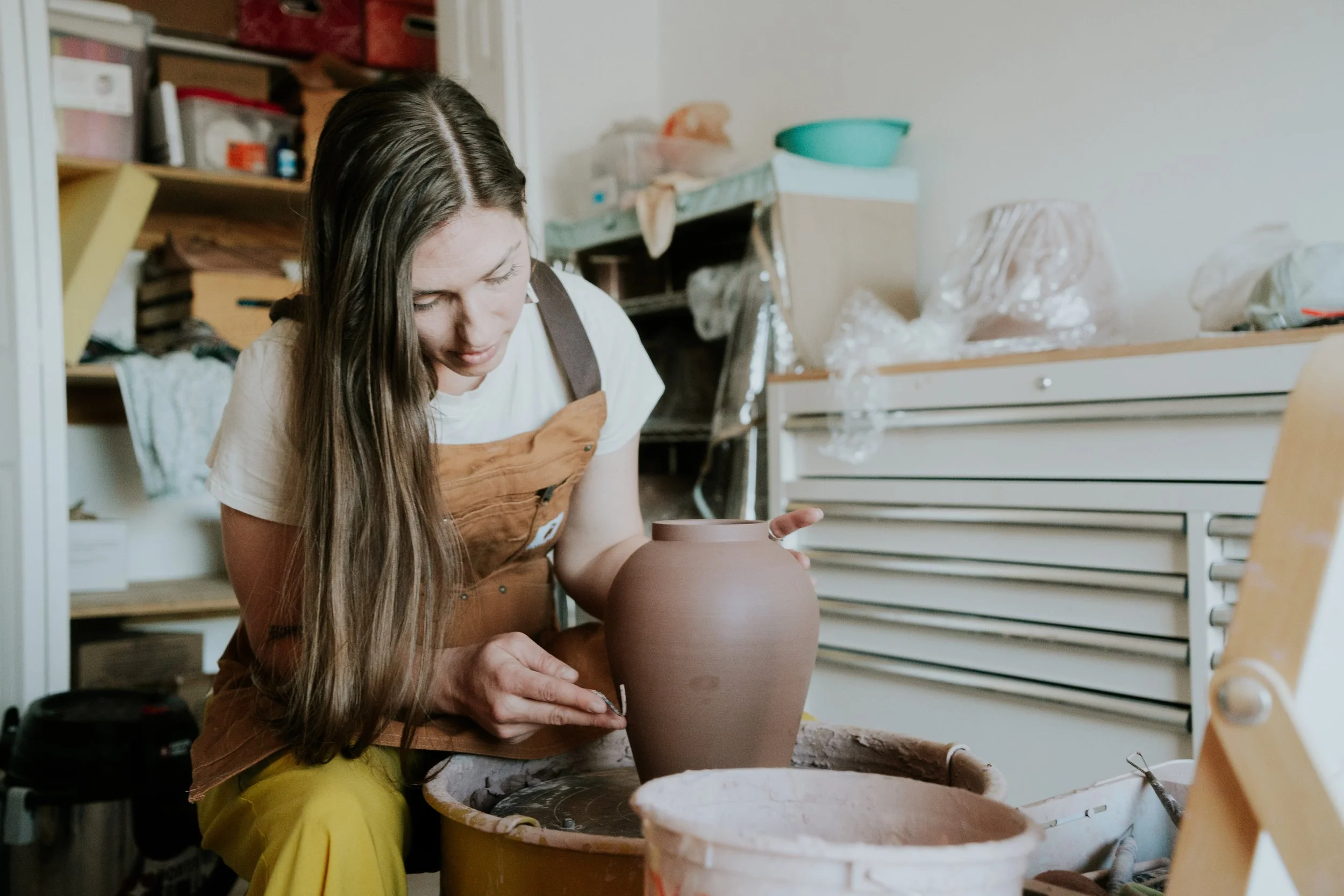
There is a long-standing divide in how the art world categorizes things, and pottery lives on the functional side of it. A piece Ysabel makes might hold someone's morning coffee or sit on a shelf they walk past every day. That proximity to ordinary life is not incidental. It is where the meaning lives. Art that lives in someone's home, held and used every day, develops a relationship with its owner that feels personal in a way that is hard to manufacture.
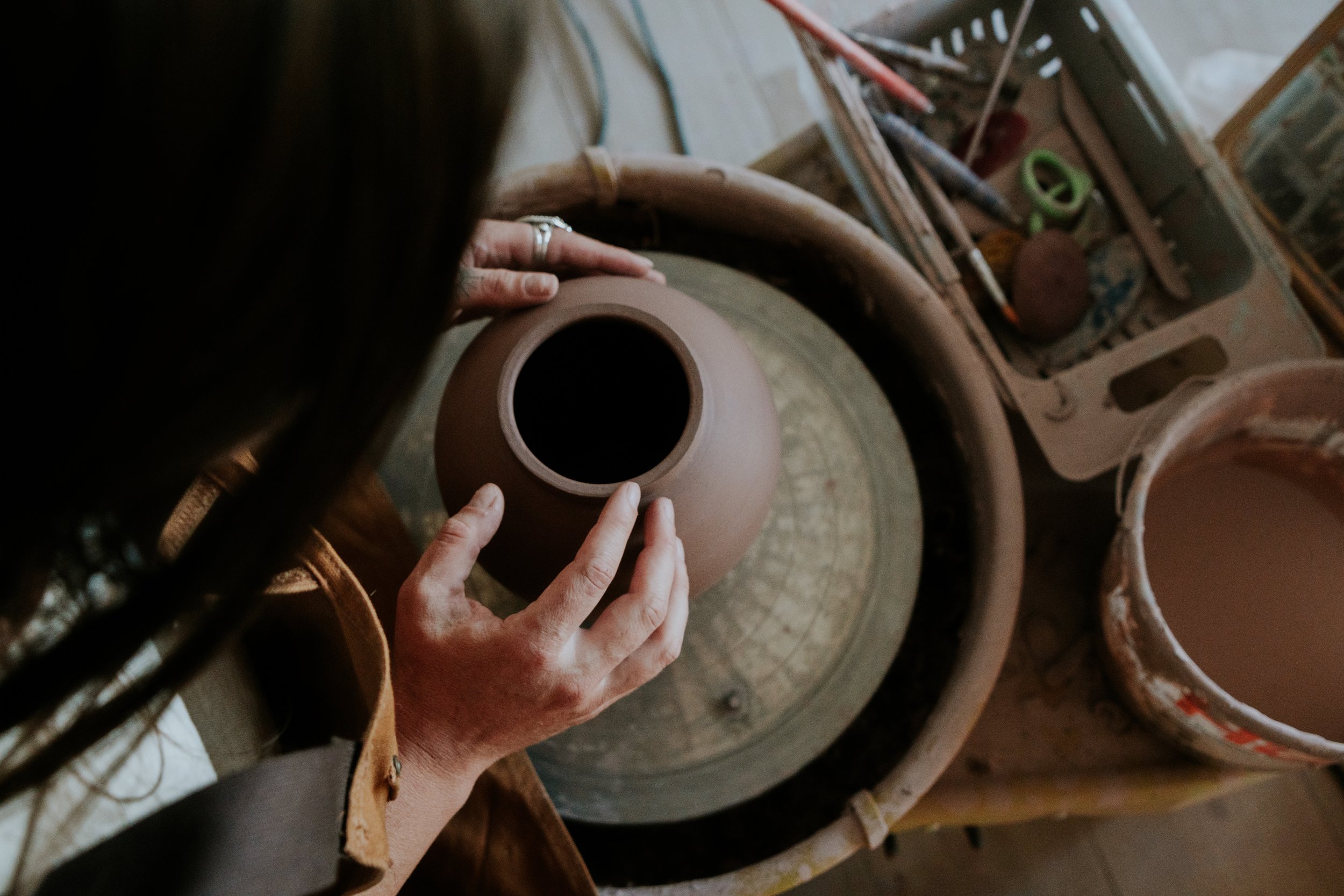
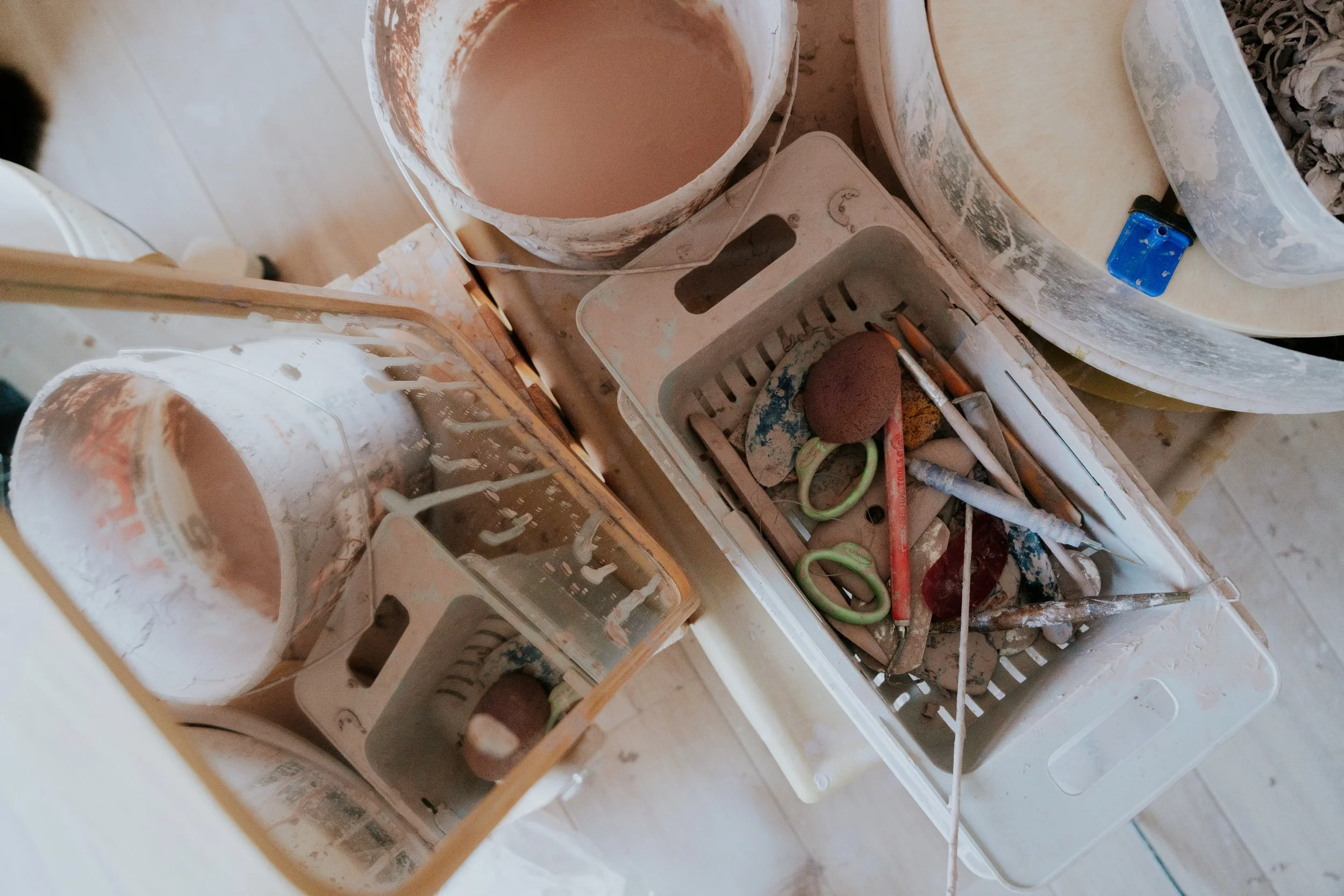
Clay has real science in it. How a clay piece behaves at temperature, how glazes shift and break under heat, the physics of centering weight on a spinning wheel. Ysabel brought her clinical mind into the studio and found a medium that could hold it. But clay is also fundamentally resistant to control. The kiln does what it does. No amount of precision fully determines the outcome. For someone trained in a field where protocol is everything, learning to release that grip was its own education. She rides the highs and reads the lows as invisible building blocks. The work she is most proud of tends to come from that place.
She talks about time the same way. Working in oncology gave her a particular relationship with it. Time is a bank account with no visible balance. You spend it or you don't. Returning to art was, in part, a decision about how she wanted to spend hers.
Her first memory of making something and feeling proud of it is simple. She had a mother who made things and encouraged her to do the same. She drew birds as a child, unremarkable ones as she says, but the process felt good and she kept going. She carries that forward as a broader belief… children are imaginative by nature, and all we need to do is value and nurture that creativity past the age when the world starts asking you to be practical instead. What gets in the way is a culture that asks people to justify making things, to measure the output, to explain the value. She is not interested in that ask.
The community around her makes the practice possible. Her partner Carlos sets up every market with her before heading into a twelve-hour shift. Her bestie Jordon spends hours in a hot dusty studio with her just to hang out and shares her work with everyone she knows. People save dry cleaning bags for her because they know she uses them to cover her pots. Even the smallest moments of encouragement mean everything, she says. Together they are what holds a creative life upright.
What has recently shifted her thinking is FRAMERATE: Desert Pulse at Desert Botanical Garden. At its core, the exhibition is a collection of ecological data points about the Sonoran Desert. But rendered in light, sound, and image, the science becomes something you feel. She sees that as proof of what she already knew. Art and science are not separate conversations. They never were.
Success, for Ysabel, is no longer a title or a metric. It is time with people she loves, good health, and being able to make art and share those colorful moments with others. Getting enough sleep is genuinely part of that picture.
The best thing she ever did was learn something she never thought she would be good at. Clay gave her that. Not mastery at first, but proof to herself of her own capability. Now she is working on both, pushing into new territory within the medium and going deeper, learning more about what she already knows. That kind of curiosity has a way of reaching further than the studio.
What the kiln teaches is what science already knows… that the most meaningful outcomes come not from control, but from understanding the process well enough to trust what happens when you let go.
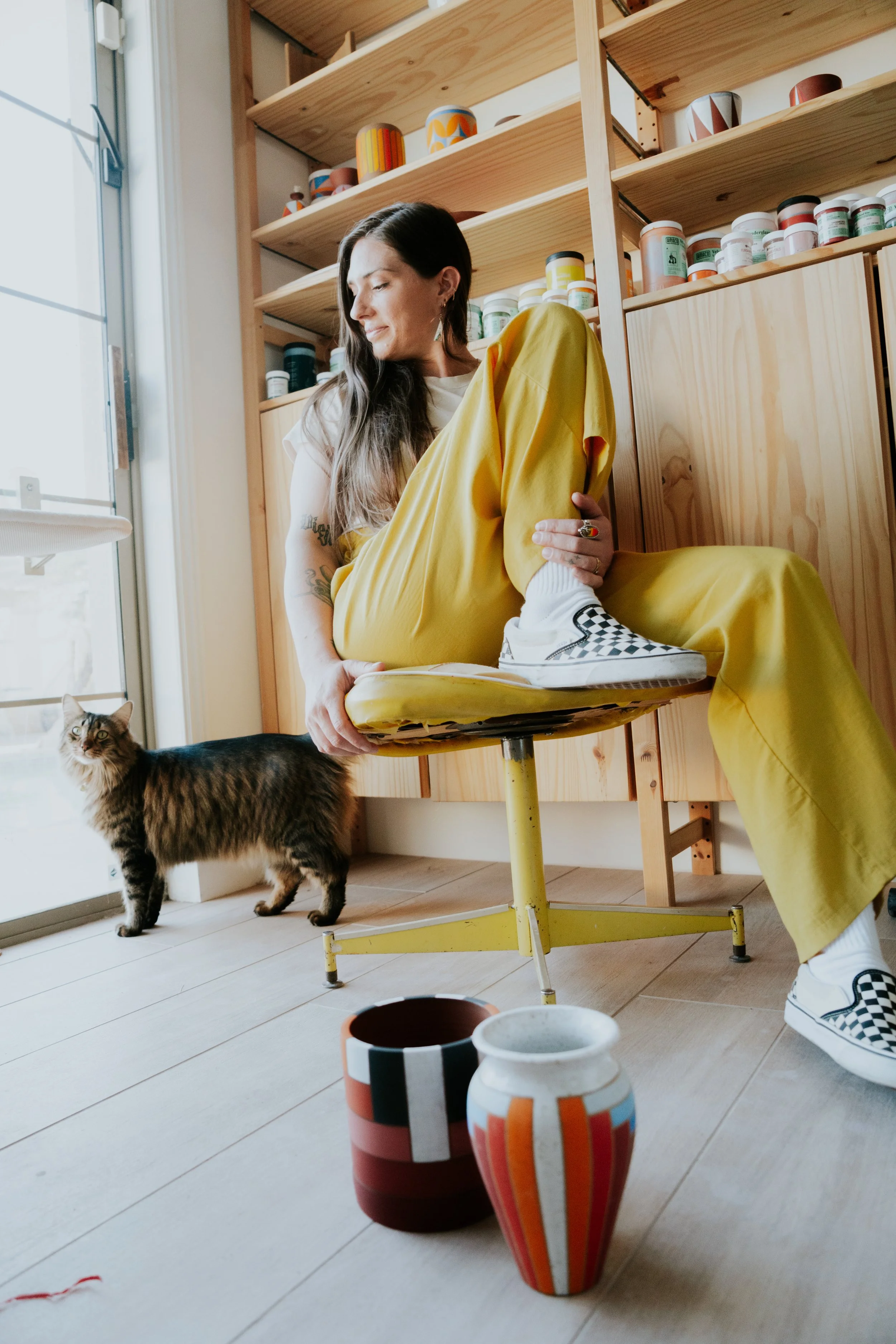
Follow Ysabel and Gold Dust Art Co. at @gold.dust.art.co and shop her work when you are able.